Buffet style catering for wedding is the most misjudged decision in reception planning. Couples either dismiss it as cheap-looking or choose it purely to save money, and both groups are working from outdated assumptions. The truth from our side of the chafing dish: a well-designed buffet outperforms a mediocre plated dinner every time, and a buffet at the wrong venue or timeline can stall an entire reception.
This guide lays out exactly when buffet service works, when it does not, what it really costs in the Bay Area in 2026, and how it compares against plated and family-style service.
What Buffet Service Actually Costs
| Service style | Bay Area per-person range | Staffing level |
|---|---|---|
| Buffet, full-service | $85 to $120 | Moderate |
| Family-style | $95 to $140 | High |
| Plated | $110 to $165 | Highest |
On a 120-guest wedding, choosing buffet over plated saves roughly $3,000 to $5,400 before the 18 to 22% service charge is applied, which compounds the savings further. That is real money. But note the floor: a full-service buffet still runs $85+ per person in this market, because the savings come from fewer servers, not cheaper food.
One myth to retire: buffets do not save much on food cost. They often use more food than plated service because guests serve themselves generous portions and caterers must over-produce so the last table sees a full spread, not scraps. The savings are in labor.
When Buffet Style Catering for a Wedding Works
After hundreds of receptions, these are the conditions where buffets shine:
- Guest counts of 75 to 200 with room for double-sided lines. A double-sided buffet serves 100 guests in about 25 minutes. That is faster than most plated services.
- Venues with generous floor space. Barns, wineries, industrial spaces in Oakland and San Leandro, and backyard tents all give a buffet room to breathe.
- Menus built on abundance. Braises, roasted meats, composed salads, and comfort sides look spectacular in volume. Our fried chicken and biscuit spread draws guests back for thirds, and we design for that.
- Couples who want food variety. A buffet lets every guest build a plate around their diet without special-meal logistics.
- Relaxed timelines. If your reception has a loose, festive shape rather than a tight run of show, buffet pacing matches the mood.
When It Doesn’t Work
An honest list, because we have declined to run buffets in all of these situations:
- Tight venues. If the buffet line crosses the dance floor or bottlenecks a doorway, service slows and energy dies. Historic SF venues with protected layouts are frequent offenders.
- Strict timelines. If speeches must start at 7:40 sharp, a 200-guest single-sided buffet will betray you. Plated service is a precision instrument; a buffet is not.
- Formal black-tie receptions. Not because buffets are inherently casual, but because guests in formal wear holding plates in line reads wrong for the occasion.
- Windy outdoor sites without shelter. Chafing dishes and SF afternoon wind are enemies. For exposed sites, family-style or plated keeps food protected. (Our bay area wedding buffet team scouts this at the venue walkthrough.)
- Guest counts over 250 without multiple full buffet lines. Past that size, you need one full double-sided line per 100 to 125 guests or dinner takes over an hour.
Plated vs Buffet Wedding Service: The Real Tradeoffs
The plated vs buffet wedding decision usually gets framed as elegance versus economy. The more useful frame is control versus freedom:
- Plated gives you control: exact timing, exact portions, a composed plate, guests stay seated. It costs more because every element requires staff.
- Buffet gives guests freedom: portion choice, variety, second helpings, natural mingling. It costs less but hands the clock partly to your guests.
- Family-style wedding catering splits the difference: platters served to each table create abundance and conversation with plated-level pacing. It needs the most table real estate and nearly plated-level staffing, which is why it prices between the two. If your heart says buffet but your venue says formal, family-style is usually the answer.
How to Make a Buffet Feel Elevated
The difference between a great wedding buffet and a hotel-conference buffet is design discipline:
- Double-sided lines, always. Halves the service time and the queue.
- Release tables by rounds. A coordinator or DJ releasing tables prevents the 80-person line that kills cocktail-hour momentum.
- Chef-attended anchor. One carving or finishing station inside the buffet adds plated-level theater for one staffer’s cost.
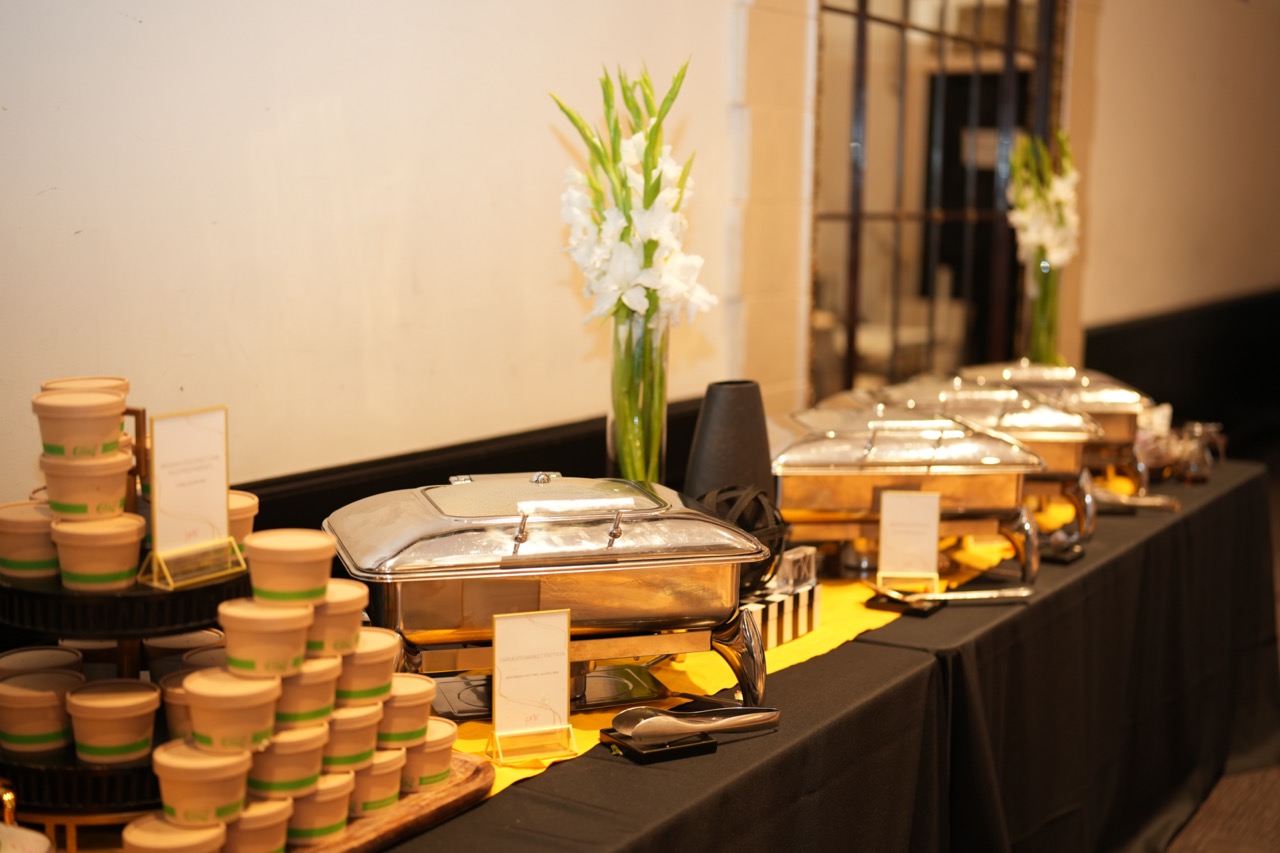
- Real serviceware and styled height. Risers, linens, florals, and varied vessels turn a food line into a tablescape. This is where our tablescaping team earns its keep.
- First plates for the head table. The couple should never stand in line at their own wedding. Good caterers plate and deliver for the couple automatically.
- Plan portions at 1.5x. Guests take more at buffets; running out of the headline dish before the last table is the one unforgivable buffet sin.
Making the Call
Choose buffet style catering for a wedding when your venue has space, your timeline has slack, and your menu celebrates abundance. Choose plated when the schedule is tight and formality is the point. Choose family-style when you want both and can fund the staffing. Whichever way you lean, lock your decision before finalizing the floor plan, since service style drives layout. For how this fits into vendor selection, see our guide on book wedding caterer, and for the full budget math, the wedding catering price guide.
FAQ
Is buffet style cheaper than plated for a wedding?
Yes, typically $25 to $45 less per person in the Bay Area, because buffets need fewer service staff. Food costs are similar; labor is the difference.
Is a buffet tacky at a wedding?
No. A styled, double-sided buffet with a chef-attended station reads as generous and warm. What reads poorly is an undersized single line, foil pans, and a 45-minute queue, all of which are execution failures, not format failures.
How long does buffet service take at a wedding?
A double-sided buffet line serves roughly 100 guests in 25 to 30 minutes. Add a second full line above 125 guests to keep dinner under 45 minutes.
What is the difference between buffet and family-style wedding catering?
At a buffet, guests walk to the food; with family-style, staff bring shared platters to each table. Family-style costs $10 to $20 more per person due to staffing but keeps guests seated with plated-style pacing.
The Bottom Line
Buffet style catering for a wedding is not a compromise; it is a format with specific strengths and specific failure modes. Match it to the right venue, line design, and menu, and your guests get abundance, variety, and a faster dinner than most plated services deliver.
Pinx Catering has designed wedding buffets, family-style feasts, and plated dinners across the Bay Area since 2011, with the florals, rentals, and tablescaping to make any format look intentional. Request a quote at pinxcatering.com and we will tell you honestly which service style fits your venue.