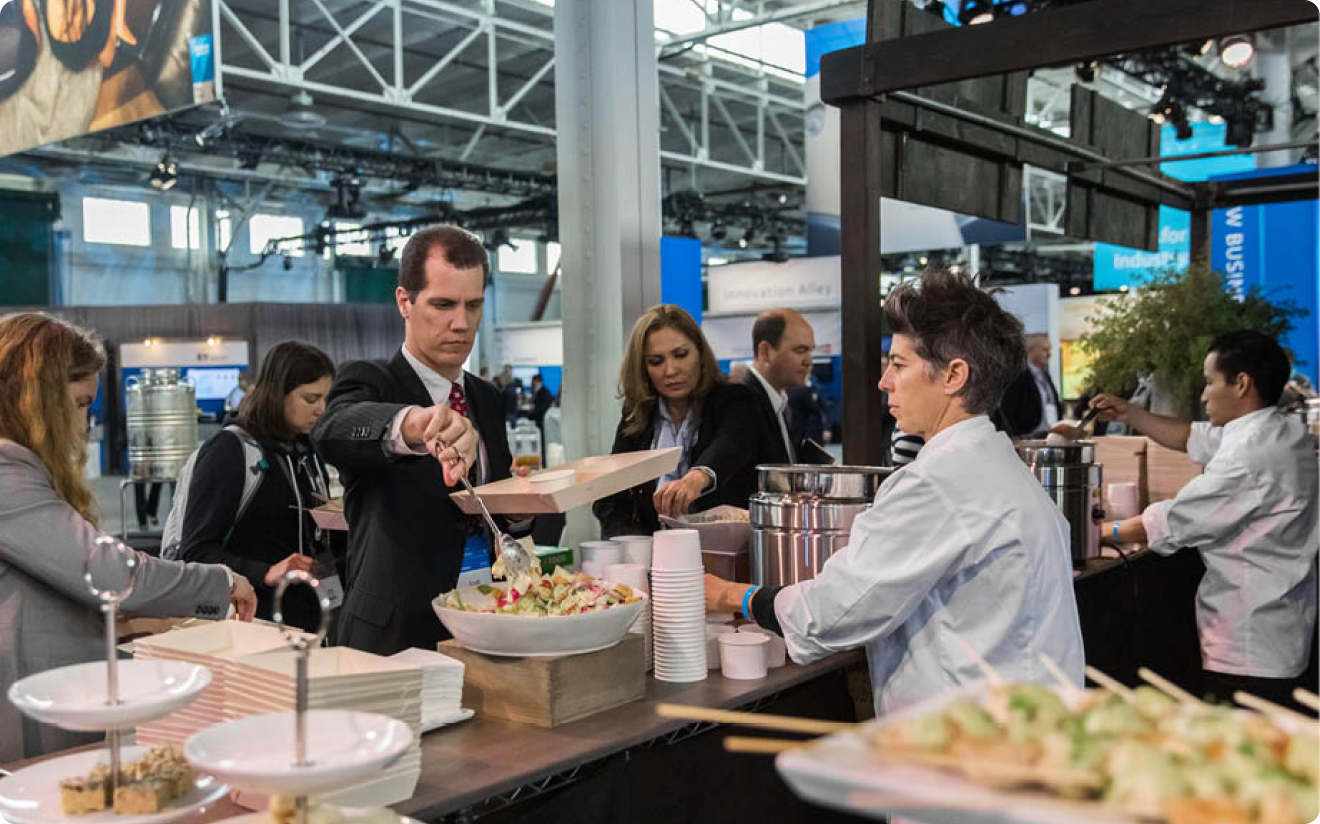

Corporate event catering usually lands on someone’s desk as a side quest: an HR generalist, an EA, or an office manager who now owns feeding 200 people in five weeks alongside their actual job. We have worked with hundreds of those planners since 2011, and the difference between a smooth event and a stressful one is never talent; it is sequence. Do these six steps in order and the event runs itself.
Step 1: Lock Headcount and Dietary Data First (Week 1)
Everything downstream prices off headcount, so start here, not with menus.
- Send the RSVP with a dietary question attached. One combined survey: attendance, plus checkboxes for vegetarian, vegan, gluten-free, halal, kosher-style, and major allergies. Asking later means asking twice.
- Apply the hybrid discount. For non-mandatory events at hybrid companies, real attendance runs 80 to 90% of RSVPs. Cater to 90% of yes-responses; this number has held across our deliveries since 2021.
- Expect 25 to 35% of any Bay Area headcount to have a dietary preference or restriction. That is not a complication; it is a design input. Component-based menus absorb it effortlessly.
Step 2: Set the Budget With a Formula, Not a Guess (Week 1)
The 2026 Bay Area math for business event catering:
| Tier | Per person | Use case |
|---|---|---|
| Drop-off buffet | $20 to $32 | Internal celebrations, team lunches |
| Staffed buffet or stations | $45 to $65 | All-hands, milestone events |
| Premium full-service | $65 to $85 | Client-facing, executive, launches |
Then add: 18 to 22% service charge on staffed events, bartenders at $50 to $75 per hour (one per 65 to 75 guests), delivery and logistics ($25 to $150 depending on building), and tax. A defensible budget line is: (headcount x 0.9) x per-person tier x 1.35 to cover all-in costs on staffed events. Full pricing detail, including the SF building fees that surprise finance teams, is in our SF corporate catering cost guide.
Step 3: Choose Format Before Menu (Week 2)
Format is the decision that shapes everything; menu is decoration on top of it.
- Standing reception with stations maximizes mingling; right for networking goals and celebrations. Plan 8 to 12 bites per guest for a 2-hour evening event.
- Buffet lunch or dinner feeds efficiently; right for all-hands and trainings. One double-sided line per 100 to 125 guests keeps service under 30 minutes.
- Plated service signals occasion; right for executive dinners and awards nights, at the top of the budget range.
- Boxed or individual keeps the agenda moving; right for working sessions, covered in depth in our corporate meeting menus guide.
One veteran observation: the most common format mistake is plated service chosen for prestige at events whose actual goal is mingling. Stations almost always serve a celebration better, and cost less.
Step 4: Vet and Book the Caterer (Weeks 2-3)
Your corporate event planning checklist for company event catering vendors:
- Capacity proof. Have they staffed your event size in the last year? Ask for a sample staffing plan: servers per guest, kitchen team, lead.
- COI readiness. Your building or venue will require a certificate of insurance naming them as additional insured. A caterer who handles this routinely will say so immediately.
- Dietary fluency. Ask how they label buffet items. The right answer involves every-item ingredient cards, not a binder somewhere.
- A real tasting for events over $5,000. Treat it as a working session on hold times and presentation, not a free lunch.
- Itemized proposal. Food, staff, rentals, delivery, service charge, tax as separate lines. Headline-only quotes hide the 35%.
Book 3 to 6 weeks out for standard events; 8 to 12 weeks for 300+ guests or December dates, which collide with holiday party season (see the booking calendar in our corporate holiday catering guide).
Step 5: Build the Run of Show With Your Caterer (1-2 Weeks Out)
This is the step skipped most often and missed most painfully. Thirty minutes on the phone covers it:
- Access: dock, freight elevator, security list, COI confirmation, load-in window.
- Timeline: when food goes live relative to speeches; nothing strands a buffet like a CEO who talks 25 minutes past the food window.
- Power and space: stations need outlets and table real estate; confirm both against the floor plan.
- The 3 p.m. rule: for evening events, your caterer’s setup crew should be on-site at least 2 hours before guests. If your venue limits early access, say so now, not on the day.
- Leftover plan: designate a fridge or a donation pickup in advance.
Step 6: Close the Loop (Day After)
Two emails the morning after: one to attendees with a three-question pulse survey (food quality, quantity, one thing to change), one to the caterer with honest feedback and, if the event hit, a hold on the next date. Planners who run a feedback loop turn vendors into partners; by the third event, your caterer arrives knowing your building, your dietary map, and your CEO’s speech-length tendencies. That institutional knowledge is the cheapest event insurance available, and it is why recurring HR event planning relationships beat one-off procurement every time.
FAQ
How far in advance should you book corporate event catering?
3 to 6 weeks for standard events up to 200 guests; 8 to 12 weeks for larger events, December dates, or anything requiring venue coordination.
How much should a company budget per person for event catering?
$20 to $32 per person for drop-off events, $45 to $85 for staffed events, plus roughly 35% on top of food cost for service charge, staffing, logistics, and tax at staffed events.
What questions should HR ask a corporate caterer?
Staffing plan for your headcount, COI handling, dietary labeling practice, itemized pricing, and recent events at your scale. The answers reveal operational maturity faster than any tasting.
How do you handle dietary restrictions at a large corporate event?
Survey at RSVP, then choose component-based formats (stations, build-your-own bars) with every item labeled, so restricted guests build full meals from the main spread rather than waiting on special plates.
Run the Playbook
Corporate event catering rewards sequence: headcount, budget, format, vendor, run of show, feedback. Six steps, each one easier because the previous one is done. Keep this page; it is the checklist.
Pinx Catering has been the founder-led catering partner for Bay Area HR and workplace teams since 2011, with elevated comfort food, full staffing, rentals, and even DJ and lighting for the events that call for it. Request a quote at pinxcatering.com and skip straight to step four with a vendor who has read the playbook a few hundred times.